金融のプロフェッショナルであるファイナンシャルアドバイザーの紹介事業
デジタル時代の進展に伴い、人間の処理能力をはるかに超えるAI技術がマーケティング分野での需要を急速に高めています。特に金融業界では、AIの活用が革命的な変化をもたらしています。これにより、専門的な知識を持つファイナンシャルアドバイザーと投資に関心のある人々を効率よくつなぐことが可能になりました。
具体的には、AIを活用して投資家の悩みを分析し、最適なファイナンシャルアドバイザーを見つけられます。投資家は複数の質問に回答するだけで、AIがその回答をもとに適切なアドバイザーを推薦します。このプロセスは、投資家のニーズに合わせてカスタマイズされ、よりパーソナライズされた金融アドバイスを提供することを可能にします。
当社では、総合的な金融サービスの提供を目指しており、高い専門性と広範な金融知識を持つプライベート・バンカーが多数在籍しています。これまで日本では提供されていなかった高品質な金融サービスを提供することを目標としています。当社のプライベート・バンカーは、お客様の様々なニーズに対応するため、多様なバックグラウンドを持っています。
最終的に、当社のファイナンシャルアドバイザーと投資家を結びつけることにより、より多くの人々の金融リテラシーを向上させることができます。これにより、一人ひとりがFXや外貨預金、NISA、株式など、自分の性格やライフスタイルに合った投資や資産運用を行うことが可能になります。当社では、個々の顧客のニーズに合わせたカスタマイズされた金融サービスを提供することで、投資家の多様な要望に応えることを目指しています。
オンラインFXゲームのシステム開発

私たちは、オンラインFXゲームのシステム開発とオウンドメディアによる情報提供事業を手がけています。私たちの特徴は、高品質なオンラインFXゲームを開発するだけでなく、プレイヤーのためのオウンドメディアも運営していることです。
オンラインFXゲーム -時空アカデミーFXオンライン-
iOSやAndroidのOSにも対応した「時空アカデミーFXオンライン」は、スマホ、PC、SwitchがあればどこでもFXトレードが出来ます。様々なトレードコンテストやゲームモードも充実しています。
- 伝説のトレーダーVSトレード・・・歴史上の英雄や伝説のキャラクターと共にトレードバトルができる特別なゲームモード
- スピードスリートレード・・・3人対戦でスピード感あるトレードが楽しめます。設定によって特別なルールや通貨ペアも登場
- チャットトレード・・・仲良しの友達とワイワイしながらFXが可能。人数が足りない時は、メンバー募集も可能
その他にも、世界のプロFXトレーダーと交流する場や、時空ごとの掲示板、日記投稿、交流イベントなどの機能も充実しており、総勢80名以上の特別なキャラクターもアーケードゲームモードで登場。彼らにトレードバトル挑戦することも、共に戦うことも可能です。
FXメディアの運営事業:「FX口座開設の窓口」を運営
わたしたちは、「FX口座開設の窓口」というFXメディアを運営しています。情報の信頼性確保のため、私たちが厳選した信頼できる情報源からのみ情報を収集して提供しています。
FX業界は日進月歩であり、最新の情報やトレンドが急速に変わるため、私たちのFXメディアも情報の迅速な更新を心掛けています。これにより、私たちのメディアを利用するプレイヤーが、最新のFX相場情報やトレンドをいち早く入手することができます。
また、私たちのFXメディアは、新しくリリースされた証券会社の情報やアップデート情報、トレーダー同士の交流やコミュニティ形成の場としても機能しています。こうした取り組みによって、私たちのメディアは多くのユーザーから信頼と安心を得ております。
私たちが開発するFXメディアは、トレーダーの要望やフィードバックを直接受け取ることができるため、ユーザーの期待に応えるFX情報を提供できることが強みです。私たちの取り組みによって、私たちはFX業界において多くの信頼と安心を得ています。
FX口座開設の窓口の詳細はこちらをクリック
FXアプリの開発
私たちは、より多くの方に快適かつ効率的なFX取引を実現していただくため、先進的な技術を駆使したFXアプリの開発を行っています。初心者からプロのトレーダーまで、幅広い層に利用されるようスムーズな取引環境の提供を目指しています。
また、リアルタイムでの相場分析、取引履歴の管理、通知機能など、充実したツールも搭載しています。さらに、取引データの暗号化や安全性の向上を図ることで、安心して利用できる環境を整えています。
私たちの強みは、ユーザーの声を反映した開発プロセスと、日々変化する金融市場に対応するアップデート体制です。多様なニーズに応えながら、常に最新の機能を備えたアプリを提供することで、ユーザーが持つ取引の可能性を最大限に引き出します。
これからも、革新的な技術と柔軟な対応力を活かし、より優れたFXアプリを通じて、金融市場の新たな価値を創造してまいります。
カードローンの実態調査
金融庁やカードローンの窓口が行っているカードローンの実態調査などを踏まえ、銀行や民間企業のお金の貸し付けやカードローン利用者がどの程度いるのかを定期的に調査しています。また、調査結果は弊社プレスリリースなどでも公表し、金融機関などにとっても参考にしてもらえるような情報提供を行っていきます。
VLDB 2004 – 30th Int. Conf. on Very Large Data Bases

VLDB 2004(30th International Conference on Very Large Data Bases)は、VLDB Endowmentによって毎年開催される、データベース テクノロジに関する主要な国際会議です。VLDB 2004は、カナダ最大の都市であり同国の金融の中心地であるトロントで開催されます。トロントは世界で最も多文化な都市と呼ばれており、年間 5 万人以上の新たな移民を受け入れ、一部の市民は100 以上の言語を話します。
XJPホールディングスは、VLDB 2004のSponsor(スポンサー)として、活動を支援しています。VLDB 2004を支援することで、弊社のFXシステムにおけるデータベースのスペック向上に相乗効果をもたらしています。
築地市場(Tsukiji Fish Market)の研究・情報紹介
「ザ・築地市場」というホームページも含め、築地市場(Tsukiji Fish Market)のいろいろな研究を行っています。場所や構造が把握できる地図や市場の歴史、安全衛生に関することなど、築地市場の様々な情報を研究し、紹介します。
AOU(全日本アミューズメント施設)の情報提供
明るく、楽しい、アミューズメント施設を目指してAOU(全日本アミューズメント施設)の情報提供を行っています。国民の皆さんに安心して楽しく遊んでいただける、もっとも身近なレジャー施設としてのゲームセンターに関する情報を提供して社会に貢献していきます。
AOUアミューズメント・エキスポ(EXPO)などのオンラインゲーム博覧会で、オンラインゲームなどの展示会の情報も紹介しています。私たちは、各都道府県のAOU(アミューズメント施設)や団体等と密接な連携をとり、安全で明るいゲームセンターを紹介していきたいと考えております。
独立行政法人 日本万国博覧会記念機構 / 万博公園(万博記念公園)

万博公園(万博記念公園)の施設案内やイベント、万博記念基金補助事業などの情報提供を行っております。また、「人類の進歩と調和」をテーマとしたEXPO’70の紹介や、万博公園内の日本庭園・自然文化圏イベントや文化施設イベント、レクリエーションなども紹介しています。
日本民間放送(NAB)の調査・研究

日本民間放送(NAB)、民放連の調査・研究や、地デジ移行を推進するためのキャラクターである地デジカの独自イメージ調査や効果検証を行っております。また、メディアの役割に関する総合調査を行ったり、NHK経営計画の調査、地震とメディア利用行動調査なども随時行っております。
CSR/SDG事業
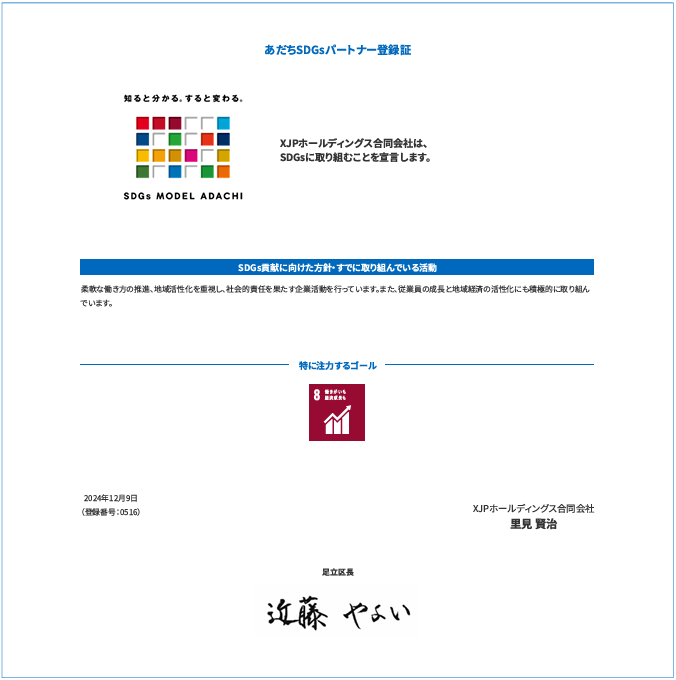
私たちXJPホールディングス合同会社のメンバーは、SDGsの実現に向けたさまざまな活動を展開しています。
リモートワークの導入・・・XJPホールディングスとして、リモートワークを取り入れています。これにより、オフィスのエネルギー消費を大幅に削減し、環境への負荷を低減しています。
エコフレンドリーな取り組み・・・私たちは、マイバッグやマイボトルを使用を心がけています。これにより廃棄物を減少させ、より持続可能なライフスタイルを促進しています。この取り組みは特定のSDGsゴールに貢献しています。
消費者志向自主宣言
XJPホールディングス合同会社
代表取締役 里見 賢治
理念
私たちは、最先端のAIテクノロジーを活用し、常に革新的な挑戦を行っています。
その上で、消費者庁が推進する「消費者志向のサステナブルな経営」を追求し、あらゆる人と共創・協働することを宣言します。
取組方針
- お客様のみでなく、弊社に関わりのある全てのステークホルダーの方の声に耳を傾けます。
- 全てのステークホルダーの方からいただいたマイナスな意見は、弊社が成長するために必要なことであると受け止め、改善することでさらなる向上に努めます。
- 発信する情報内容は常に最新かつ確実であることを第一とします。また、お客様が直感的に情報を見つけられるように、社内で協議しWebサイトの改修を行います。
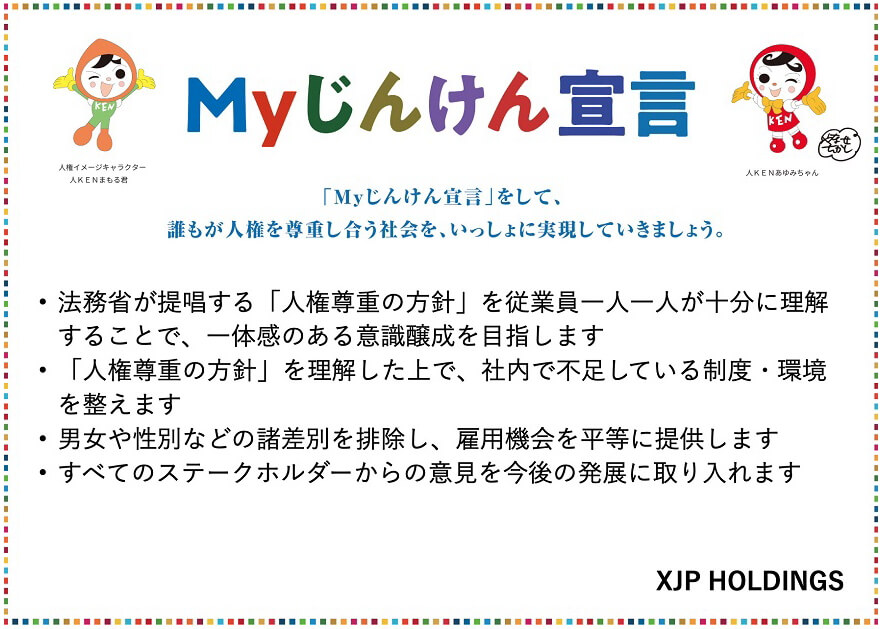
XJPホールディングス合同会社は法務省推奨の「Myじんけん宣言」に賛同します

XJPホールディングスは、AIマーケティングによる事業活動を通じて、最先端の技術で社会課題の解決に貢献し、企業として恒久的に成長することを目指しています。
また、企業が成長を続けるには、人と組織が長期にわたって良い関係を持ち互いに成長し続けることが必要だと考えています。
そこで私たちは、法務省が推奨する「Myじんけん宣言」に則り以下の取り組みに注力することで、当社に関わるすべてのステークホルダーの方の人権を尊重することを宣言します。
SDGs事業
私たちXJPホールディングス合同会社のメンバーは、事業活動を通じてSDGs(持続可能な開発目標)へ取り組むことで、社会と共に発展し、お客様に新たな価値を届けることを目指しています。

持続可能な開発目標SDGsとは
SDGsとは、「Sustainable Development Goals(持続可能な開発目標)」の略称で、2016年から2030年の15年間での達成を目指し、国連加盟193カ国が実施しています。目標は持続可能な世界を実現するための17のゴール・169のターゲットから構成され、貧困や飢餓、エネルギー、気候変動、平和的社会などが含まれています。SDGsは発展途上国のみならず、先進国自身も取り組む普遍的なもので、日本も積極的に取り組んでいます。
SDGsとは(外務省公式サイト)
従業員の幸福と健康を支援

柔軟な働き方を促進・・・リモートワークやフレックスタイム制度を導入し、従業員のライフスタイルや家庭の状況に合わせた柔軟な働き方を支援します。特に家事や育児を担う女性従業員のサポートを強化し、育児休暇や介護休業などの福利厚生制度も充実させます。
社内コミュニケーションの強化・・・定期的なチームビルディングイベントを通じて、社内のつながりを強化しています。(例:清掃活動後のレクリエーションやスポーツイベントなど)
キャリア開発サポート・・・個別のキャリアカウンセリングやセミナー、専門分野のカンファレンス参加、資格取得支援を通じて、従業員の成長とキャリアの進展を積極的に支援しています。
均等なキャリア機会の提供・・・採用から昇進までのプロセスで、性別を問わず公平な機会を確保します。透明性のある採用と昇進基準を設け、偏見のない評価を実施します。
食品ロスの削減

フードドライブの定期的実施・・・私たちは、定期的に食品を持ち寄る日を設けてフードドライブを行っています。各家庭で余った未開封の食材や常温保存が可能な食品を、共有スペース内に設置した専用の棚に提出します。集まった食品は、必要とする福祉施設・団体に寄付しています。
勉強会の開催・・・私たちは、食品ロス削減を推進するためにオンライン勉強会を開催しています。勉強会はZoomを利用しており、参加者にとっての参加の敷居を低くすることができています。また、勉強会に参加できなかった方々には、後日メールで詳細なレポートを配信し、内容を共有しています。
- 保存食品を使った料理教室
- 青果の鮮度を保つ方法を学べる講座 など
また、勉強会には社内外の方も参加が可能であり、広く食品ロス削減の知識を共有しています。これにより、実践的な対策が日常生活や業務に活かされることを期待しています。
環境への負荷の低減

リモートワークの導入・・・XJPホールディングスとして、リモートワークを取り入れています。これにより、オフィスのエネルギー消費を大幅に削減し、環境への負荷を低減しています。
エコフレンドリーな取り組み・・・私たちは、マイバッグやマイボトルの使用を心がけています。これにより廃棄物を減少させ、より持続可能なライフスタイルを促進しています。

清掃活動の実施・・・私たちは、オフィスやリモートワーク地点周辺の公共の場や道路、緑地や海岸などを定期的に清掃しています。これにより、地域の美化と環境保全に貢献しています。
地方の人材育成を支援

地方の人材育成と雇用支援・・・私たちは、地方の若者や学生を対象に職場体験やインターンシップを提供し、年間で5~10名の地方人材を育成することを目標としています。
リモートワーカーの雇用促進・・・当社は、リモートで実施可能な専門業務が多いため、地方からのリモートワーカーを積極的に採用し、地域経済の活性化に貢献しています。定期的に研修プログラムやスキルアップセミナーを開催し、最新の技術や知識を提供しています。
リモートワーク環境の整備・・・地方に住む従業員がスムーズに業務を進められるよう、高速インターネット回線の補助や最新のコミュニケーションツールを導入することで、従業員の遠隔で働くことへの不安を払拭しています。